
A car’s interior plays an important role in driving comfort, appearance, and overall experience. While many car owners focus on seats, dashboards, and floor mats, the roof lining is often overlooked. Over time, the fabric attached to the inside of the car roof can sag, develop stains, or lose its original appearance. These issues can make even a well-maintained vehicle look old and uncomfortable.
Professional car roof lining repair Chennai services help restore the interior by repairing loose fabric, improving the roof’s appearance, and bringing back a neat, well-maintained finish. Whether your vehicle has a sagging headliner, faded fabric, or damaged roof upholstery, timely repairs can make a noticeable difference.
Car roof lining, also known as a headliner, is the material fitted to the inside surface of a vehicle’s roof. It usually consists of fabric attached to a foam layer and a supporting board. Apart from giving the cabin a finished appearance, the roof lining contributes to interior comfort and helps reduce certain noises.
A clean, properly fitted roof lining creates a more refined cabin environment. It also complements other interior features, including leather seats, dashboard finishes, door panels, and car interior flooring.
When the lining begins to sag or deteriorate, the entire cabin can look neglected. Repairing it helps maintain the vehicle’s interior quality without necessarily requiring a complete interior makeover.
Recognising early signs of damage can help you decide when to arrange a repair.
Sagging or loose fabric: One of the most common problems is fabric separating from the supporting board. The lining may begin to hang near the centre, rear window, or edges of the roof.
Stains and discolouration: Dust, moisture, and everyday use can leave visible marks on the roof lining. These stains can affect the overall appearance of the cabin.
Peeling or bubbling: When the adhesive deteriorates, the fabric may form bubbles or begin peeling away from the roof surface.
Unpleasant odours: Moisture trapped in the headliner can contribute to persistent odours. If dampness is the cause, the underlying issue should be addressed before fitting new material.
A worn-out appearance: Faded, torn, or damaged fabric can make the interior look older than it really is.
If you notice these problems, professional inspection can help determine whether a minor repair, fabric replacement, or more extensive restoration is appropriate.
Several factors can affect the condition of a vehicle’s roof lining over time. Understanding these causes can help you take better care of your interior.
Cars parked outdoors are regularly exposed to high temperatures. In Chennai, prolonged heat can contribute to the deterioration of the foam and adhesive that hold the headliner fabric in place. Repeated heating and cooling may gradually weaken the bond, leading to sagging or peeling.
The adhesive used to secure the lining can lose its effectiveness as the vehicle gets older. Once the bond weakens, the fabric may separate from the backing board, even when the material itself is still in reasonable condition.
Water leaks from the roof, sunroof, or windscreen area can damage the lining. Moisture may cause stains, weaken the adhesive, and encourage mould growth if the affected area remains damp.
Using excessive water or harsh cleaning products can damage delicate headliner fabric. Aggressive scrubbing may also loosen the material or leave permanent marks.
Regular inspection and careful cleaning can help prevent avoidable damage.
Professional repair involves more than simply pushing loose fabric back into place. The appropriate method depends on the extent of the damage and the condition of the existing material.
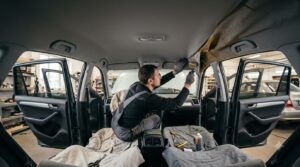
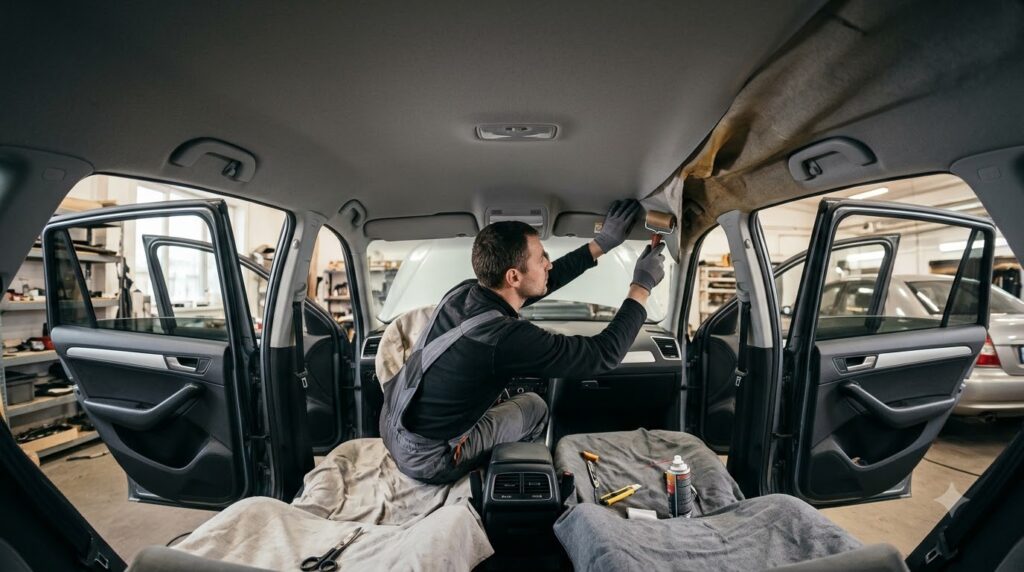
The process begins with examining the roof lining to identify sagging, stains, tears, adhesive failure, and possible moisture damage. This assessment helps determine whether the existing fabric can be retained or needs replacement.
When the fabric has separated significantly, the headliner board may need to be removed carefully. Existing material and deteriorated foam are assessed so that the underlying surface can be prepared properly.
Before new fabric is fitted, the supporting board must be clean and suitable for the repair. Any underlying moisture issue should also be addressed. Proper preparation helps create a smoother finish and supports better adhesion.
Depending on the damage, technicians may repair a limited area or replace the existing headliner material. Choosing suitable automotive upholstery fabric helps maintain a clean appearance that complements the vehicle’s original interior design.
The repaired lining is fitted neatly, with attention to the edges and contours of the roof. Components removed during the process are reinstalled carefully, and the final finish is checked for visible wrinkles, loose sections, and uneven areas.
Airbags and associated trim require particular care. Work near roof-mounted airbags should follow the vehicle manufacturer’s procedures and be handled by qualified technicians.
Repairing a damaged headliner can improve the overall experience of using your vehicle.
Improves interior appearance: Fresh, properly fitted roof fabric makes the cabin look cleaner and better maintained. It also complements existing upholstery and trim.
Supports driving comfort: A secure lining reduces the distraction caused by loose fabric hanging into the cabin. It helps maintain a comfortable and organised interior environment.
Helps maintain interior quality: Addressing sagging, peeling, or moisture-related damage early can prevent the affected area from deteriorating further.
Offers a practical alternative to major restoration: When the remaining interior is in good condition, repairing the roof lining may be more practical than undertaking a complete interior renovation.
Creates a consistent finish: Matching the roof lining with the vehicle’s existing colours and materials helps maintain a coordinated interior design.
The final results depend on the condition of the headliner board, the materials used, and the quality of the repair.
The roof lining is only one part of a vehicle’s interior. Flooring, seats, door panels, and other surfaces all contribute to the cabin’s overall appearance and comfort.
Damaged roof fabric can make the upper part of the cabin look untidy, while worn flooring or stained carpets can affect the lower section. Addressing these areas together can create a more consistent interior finish.
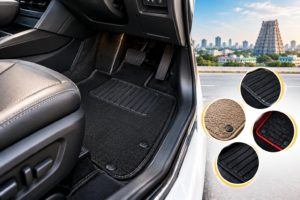
For example, restoring the roof lining while upgrading car interior flooring can help bring balance to the cabin. Durable floor coverings can make routine cleaning easier, while a neatly finished headliner improves the appearance of the roof area.
However, these upgrades do not always need to be completed at the same time. If your flooring is still in good condition, repairing the roof lining alone may be sufficient. A professional assessment can help you prioritise repairs according to your vehicle’s condition and budget.
Once the repair is complete, a few simple habits can help maintain the finish.
Avoid scrubbing the roof fabric or applying excessive water during cleaning. Use a suitable automotive upholstery cleaning method and follow the technician’s care instructions.
Where possible, park in shaded areas to reduce prolonged heat exposure. Check for water leaks around the sunroof, windscreen, and roof seals, and address them promptly.
If you notice new sagging, stains, or loose edges, arrange an inspection rather than attempting to pull or glue the fabric back yourself. Incorrect adhesives and unsuitable repair methods can damage the material further.
These precautions can help preserve the appearance of your vehicle’s interior over time.
Selecting an experienced automotive interior specialist is important for achieving a clean and lasting finish. Before proceeding with a repair, ask about the materials used, the repair method, the estimated completion time, and the total cost.
A reliable service provider should assess the actual condition of the headliner before recommending a solution. They should also take care when removing interior trims and working around electrical components or airbag systems.
If replacement is required, discuss available fabric colours and textures to ensure they suit your vehicle. Clear communication about the work involved helps you make an informed decision.
When comparing car roof lining repair Chennai services, consider workmanship, material quality, and the provider’s experience rather than choosing solely on price.
A damaged car roof lining can affect the appearance and comfort of your vehicle’s cabin, but the problem does not always require a complete interior renovation. Professional inspection and the right repair method can restore a neat finish, address loose fabric, and help maintain the overall quality of your car’s interior.
Whether you need to correct a sagging headliner or refresh the cabin alongside other upgrades, timely repairs can make your vehicle feel cleaner and more comfortable. By combining proper workmanship with regular maintenance, you can keep your interior looking its best for longer.
If your car roof lining is peeling, stained, or sagging, consider a professional inspection to identify the most suitable repair solution for your vehicle.
Where premium materials meet expert craftsmanship.
WhatsApp us