
Getting into a car that has been parked under the hot sun can be uncomfortable, especially during summer. The seats absorb heat throughout the day, making the seating surface warm and sometimes unpleasant. Even after switching on the air conditioner, it can take several minutes for the seats to become comfortable.
This is where a car seat ventilation system makes a noticeable difference. Designed to improve airflow through the seating surface, this technology helps reduce heat buildup and keeps passengers comfortable during long drives.
Unlike traditional car seats that retain heat, ventilated seats use small fans and specially designed airflow channels to circulate air. This helps create a cooler and more comfortable seating experience.
Let’s understand how this technology works, its benefits and why more car owners are considering ventilated seats for everyday driving.
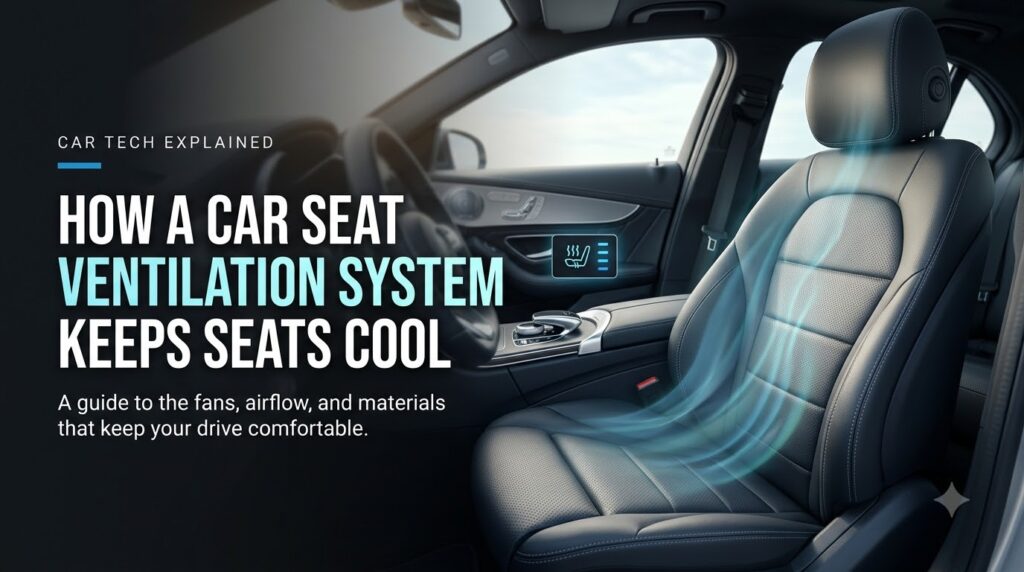
A car seat ventilation system is an advanced comfort feature designed to improve airflow around the driver and passenger seating areas. It uses small electric fans installed inside the seat to circulate air through specially designed channels.
These systems generally operate through perforations in the seat upholstery. The airflow helps remove excess heat and moisture that can accumulate between the passenger and the seat.
Unlike traditional cooling systems, ventilated seats do not necessarily produce cold air. Instead, they improve air circulation to make the seating surface feel cooler.
Modern ventilated seats may include different fan speeds, adjustable controls and separate settings for the driver and front passenger.
Understanding how ventilated seats operate helps explain why they improve driving comfort, particularly in warm weather.
The system works through a combination of small fans, airflow channels and perforated seat materials.
The system contains compact electric fans fitted inside the seat structure. When activated, these fans move air through the internal ventilation channels.
Depending on the design, the system may push air towards the seating surface or draw warm, humid air away from the passenger’s body.
Ventilated seats feature tiny holes across the seating surface. These perforations allow air to pass through the upholstery and reach areas where heat and moisture accumulate.
Leather and premium upholstery seats can benefit from this feature because their surfaces may feel warmer when exposed to direct sunlight.
When someone sits for an extended period, body heat gets trapped between the person and the seat. This can create an uncomfortable, warm feeling.
The ventilation system continuously circulates air to reduce this trapped heat and improve the overall seating experience.
Many systems offer multiple ventilation settings. Drivers can select the airflow level according to their comfort preferences and weather conditions.
This makes a car seat ventilation system useful for both short city commutes and longer journeys.
Indian weather conditions make seat ventilation an attractive comfort upgrade. During summer, parked vehicles can become extremely hot, particularly when exposed to direct sunlight.
Even premium leather seats can absorb and retain heat, making the initial driving experience uncomfortable.
Ventilated seats car in India are becoming an appealing option for owners who want additional comfort without changing their vehicle’s overall interior design.
Here are some situations where this feature can be particularly useful:
Although ventilation does not replace the car’s air conditioning system, it complements cabin cooling by improving airflow around the passenger.
Not all car seats provide the same level of comfort. Traditional seats mainly depend on the upholstery material, while ventilated seats actively circulate air.
A well-designed ventilation system can improve the overall driving experience in several ways.
Better Seating Comfort: Continuous airflow helps prevent the uncomfortable feeling of sitting on a warm seat for extended periods.
Reduced Sweating: Air circulation helps moisture evaporate, reducing the sticky feeling commonly experienced during summer drives.
Improved Long-Distance Driving: Drivers who travel frequently can enjoy a more comfortable seating environment during longer journeys.
Enhanced Premium Interior Experience: Ventilated seating complements leather upholstery and other premium interior modifications.
Personalised Comfort: Adjustable fan settings allow passengers to choose an airflow level that suits their preferences.
If your vehicle does not come with factory-installed ventilation, an aftermarket upgrade may be worth considering. However, selecting the right system is important to achieve good performance.
Before installation, consider the following factors:
It is also important to check whether aftermarket modifications could affect your vehicle warranty or existing seat safety systems.
Finding the best car cooling seats involves more than simply selecting a system with powerful fans. The overall design, comfort and installation quality all contribute to the experience.
Look for a system that offers balanced airflow, low operating noise, comfortable upholstery and easy-to-use controls.
For car owners planning an interior upgrade, ventilated seats can be combined with other customisation options to create a more comfortable cabin.
At the same time, remember that regular ventilated seats generally circulate existing cabin air rather than refrigerating it. Running the air conditioner alongside seat ventilation can improve the cooling experience.
For people who regularly drive in hot and humid conditions, a car seat ventilation system can be a valuable comfort upgrade.
It is particularly useful for vehicle owners who have leather interiors, spend considerable time in traffic or frequently travel long distances.
Although it may not replace the cooling performance of an air conditioner, it addresses a different problem by improving airflow directly around the seating area.
Choosing a properly designed system and getting it professionally installed can make a noticeable difference to everyday driving comfort.
Comfortable seating plays an important role in creating an enjoyable driving experience. A car seat ventilation system helps manage heat and moisture through continuous airflow, making everyday journeys more comfortable, especially during hot weather.
Whether you own a premium vehicle or want to upgrade your existing car interior, ventilated seating is a practical feature worth considering. With the right equipment, suitable upholstery and professional installation, you can enjoy a more comfortable cabin throughout the year.
Upgrade your car interiors with modern comfort features and make every journey more enjoyable.
Where premium materials meet expert craftsmanship.
WhatsApp us